

Acoustic Guitar Strings: Types, Gauges, Tone, and Care
Acoustic Guitar Strings: Types, Gauges, Tone, and Care
Acoustic guitar strings strongly affect how a guitar feels, sounds, and responds.
Different materials and gauges can make the same guitar feel bright, warm, soft, powerful, easy, or firm. Understanding strings helps you choose a setup that matches your hands, instrument, climate, and style.
Why Strings Matter
Strings influence:
- tone
- volume
- sustain
- tuning stability
- finger comfort
- bending difficulty
- strumming response
- fingerpicking clarity
Old strings can make a good guitar sound dull, while fresh strings feel clearer and more responsive.
Nylon and Steel Strings
The two main families are nylon and steel, designed for different instruments.
Nylon Strings
Nylon strings are used on classical and flamenco guitars.
They have:
- lower tension
- softer feel
- warm tone
- smooth fingerstyle response
- wider string spacing
The treble strings are usually nylon, while the bass strings have nylon cores wrapped with metal. The wider classical neck may require more stretching.
Steel Strings
Steel strings are used on steel-string acoustic guitars.
They provide:
- brighter tone
- stronger projection
- sharper attack
- more sustain
- powerful strumming response
Steel strings create much more tension. Never install them on a classical guitar unless it was designed for steel, because the extra tension can damage it.
Common Steel-String Materials
Steel-string sets use a steel core wrapped with different metals.
80/20 Bronze
80/20 bronze strings often sound:
- bright
- crisp
- clear
- lively
They suit strong strumming and fresh, sparkling tone, though the brightness may fade quickly.
Phosphor Bronze
Phosphor bronze strings usually sound:
- warm
- balanced
- rich
- smooth
They are popular for both strumming and fingerpicking.
Silk and Steel
Silk-and-steel strings use lower tension and produce a warm, quiet sound.
They suit:
- vintage-style guitars
- light fingerpicking
- relaxed practice
- players who need less tension
They provide less volume than standard phosphor bronze.
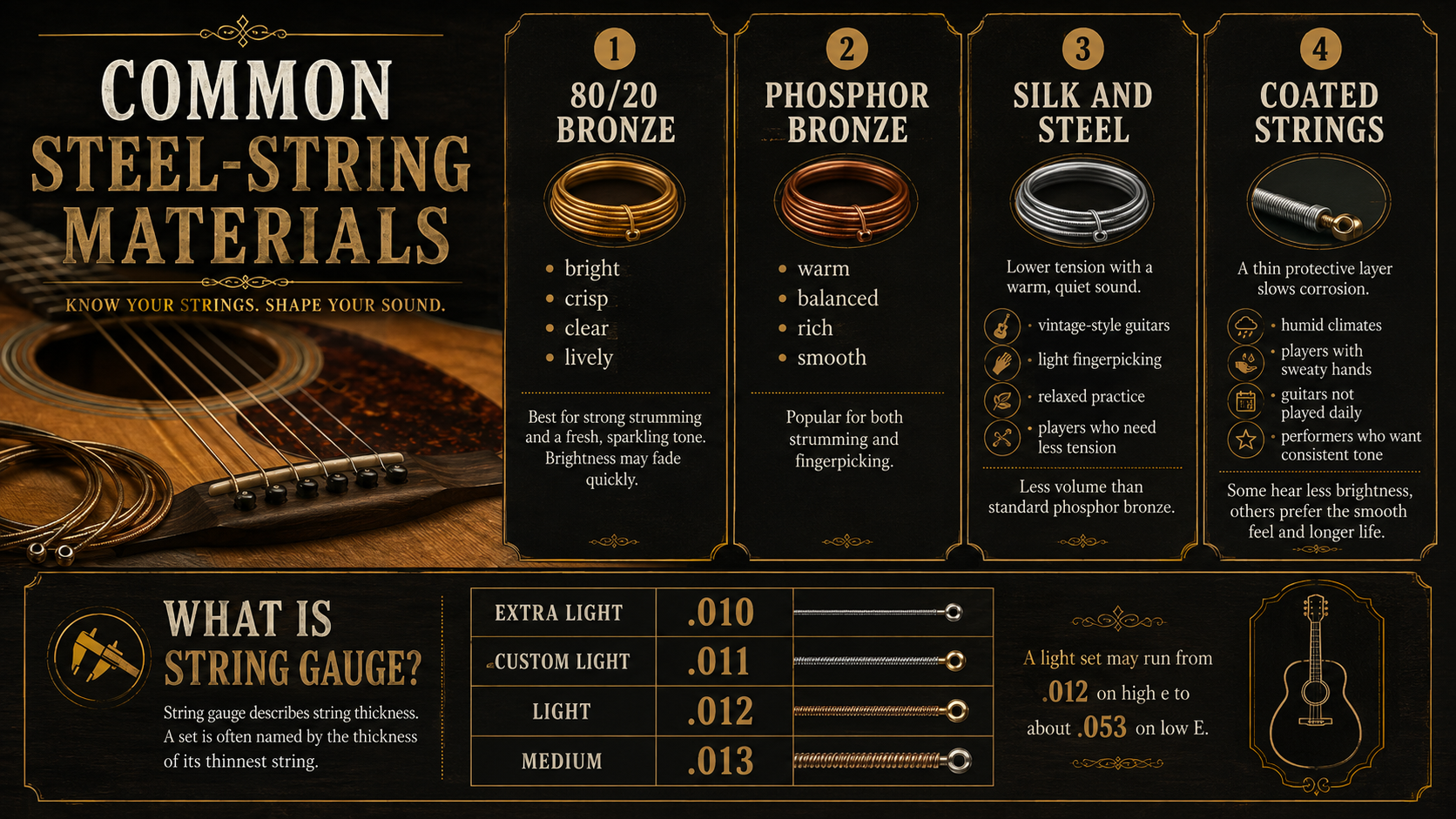
Coated Strings
Coated strings have a thin protective layer that slows corrosion.
They are useful for:
- humid climates
- players with sweaty hands
- guitars that are not played daily
- performers who want consistent tone
Some players hear less brightness, while others prefer the smooth feel and longer life.
What Is String Gauge?
String gauge describes string thickness.
A set is often named by the thickness of its thinnest string.
Common steel-string acoustic gauges include:
- extra light:
.010 - custom light:
.011 - light:
.012 - medium:
.013
A light set may run from .012 on high to about .053 on low .
Light Strings
Light strings are popular with beginners.
They are:
- easier to press
- easier to bend
- comfortable for longer practice
- suitable for fingerpicking
- easier on smaller hands
Very light strings may produce less volume or buzz on a low setup. Light phosphor bronze is a practical beginner choice.
Medium Strings
Medium strings create more tension.
They can provide:
- stronger bass
- more volume
- fuller tone
- firmer strumming response
- better resistance under heavy picking
They require more finger strength, so confirm that the guitar can handle the extra tension.
How Gauge Changes Playability
Thinner strings require less pressure; thicker strings feel firmer under strong strumming.
Choose lighter strings when:
- you are a beginner
- your fingertips tire quickly
- you play gentle fingerstyle
- you use string bends
- your guitar has a smaller body
Choose heavier strings when:
- you strum strongly
- you want more bass and volume
- you use lower tunings
- your guitar is built for greater tension
Comfort matters more than maximum thickness.
Strings and Guitar Setup
Changing gauge can affect setup because more or less tension changes the neck’s position.
This can change:
- action height
- fret buzz
- intonation
- neck relief
- tuning feel
Large changes may require adjustment. Seek a technician if playability becomes worse.
When to Change Strings
Strings collect sweat, oil, dust, and fret wear.
Change strings when they:
- sound dull
- feel rough
- look dark or rusty
- lose tuning stability
- become difficult to intonate
- break often
- feel uneven
Performers may change strings every few weeks, while casual players may use a set for months. Climate, coating, and practice time affect lifespan.
Making Strings Last Longer
Wash your hands before playing and wipe the strings afterward.
Also:
- keep the guitar in its case
- avoid touching strings with dirty hands
- protect it from humidity changes
- do not leave it in a hot car
- replace rusty strings quickly
Cambodia’s warm, humid climate can speed corrosion, so coated strings and regular wiping help.
Changing Acoustic Guitar Strings

A simple steel-string process is:
- Loosen the old string.
- Remove it from the tuning peg.
- Remove the bridge pin carefully.
- Take out the old string.
- Insert the new string’s ball end.
- Replace the bridge pin.
- Pull gently so the ball seats under the bridge.
- Thread the string through the tuning post.
- Wind it neatly.
- Tune slowly to pitch.
Do not force bridge pins with pliers; use a proper puller or seek help.
Stretching New Strings
New strings often go out of tune while settling.
After tuning:
- Pull each string upward gently near the middle of the neck.
- Retune.
- Repeat several times.
- Play for a few minutes.
- Check the tuning again.
Do not pull hard enough to break the string.
Tuning should then become more stable.
Choosing Strings for Your Style
Gentle Fingerpicking
Try:
- light phosphor bronze
- silk and steel
- coated light strings
These provide comfort and clarity.
Strong Strumming
Try:
- light or medium phosphor bronze
- 80/20 bronze
- strings with firmer tension
These offer stronger projection.
Warm Ballads
Phosphor bronze often produces a balanced, smooth tone that suits romantic Khmer songs.
Bright Recording Tone
Fresh 80/20 bronze strings can sound crisp and detailed.
Long Lifespan
Coated strings are useful when you want fewer string changes.
A Beginner Recommendation
Most beginner steel-string players can start with:
- light gauge
- phosphor bronze
- coated or uncoated based on budget
A .012 set is common, though sensitive fingers may prefer .011.
For classical guitar, use a normal-tension nylon set.
Do not copy a famous player’s choice automatically; their guitar and technique may differ from yours.
Practice After Changing Strings
Fresh strings may feel slippery and unusually bright.
Practice:
- open chords such as , , , , and
- slow chord changes
- gentle down-strums
- fingerpicking patterns
- tuning checks
Check for buzzing and secure bridge pins. New strings settle after some playing.
Final Thoughts
Strings are an affordable way to change an acoustic guitar’s sound and feel.
The right set should match:
- your guitar type
- your hand strength
- your playing style
- your preferred tone
- your climate
- your practice habits
Beginners should prioritize comfort and clean technique.
Start with a light or normal-tension set, keep the strings clean, and replace them when the tone becomes dull.
Good strings cannot replace practice, but they can make it more comfortable and enjoyable.
— Written by the ReanChord team.